
Introduction: Why does the future of product engineering matters?
The future of product engineering is being reshaped by rapid technological advancements, evolving customer expectations, and the need for sustainable, scalable innovation. Modern engineering is no longer confined to design and manufacturing—it now integrates machine learning applications, predictive analytics, and cross-functional collaboration to create intelligent, user-focused products.
Organizations that adopt forward-thinking innovation strategies will outperform competitors by reducing development cycles, improving quality, and enhancing customer satisfaction.
🌍 Key trends defining the future of product engineering
1. Edge computing for real-time product intelligence
Edge computing enables data processing closer to the source—devices, sensors, or machines—rather than relying solely on centralized cloud systems.
Benefits include:
-
Faster response times for smart products
-
Reduced latency in IoT-enabled systems
-
Improved reliability for mission-critical applications
In product engineering, edge computing supports real-time monitoring, adaptive systems, and autonomous decision-making.
2. Digital twins technology: Engineering in a virtual world
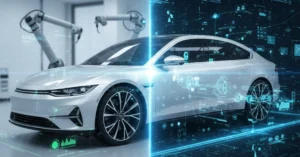
Digital twins technology creates a real-time virtual replica of a physical product or system.
Why it’s transformative:
-
Simulates performance under real-world conditions
-
Enhances product lifecycle management (PLM)
-
Reduces prototyping and testing costs
When paired with predictive analytics, digital twins allow engineers to anticipate failures and optimize performance before physical deployment.
🔧 Advanced engineering tools and methodologies
3. Finite Element Analysis for precision engineering
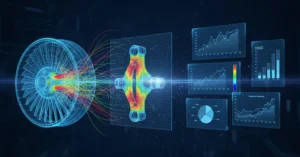
Finite element analysis (FEA) remains a cornerstone of modern product engineering.
Applications of FEA include:
-
Structural integrity testing
-
Thermal and stress simulations
-
Design validation before manufacturing
FEA ensures products meet safety, durability, and compliance standards early in the design phase.
4. Additive manufacturing: From prototyping to production
Additive manufacturing (3D printing) is no longer limited to rapid prototyping—it’s now integral to production strategies.
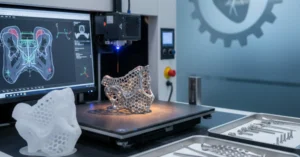
Key advantages:
-
Complex geometries with minimal waste
-
Faster design iteration cycles
-
Customization at scale
Engineers increasingly combine design for manufacturability (DFM) with additive techniques to ensure cost-effective production.
🤖 AI-Powered innovation in product engineering
5. Generative AI tools and machine learning applications
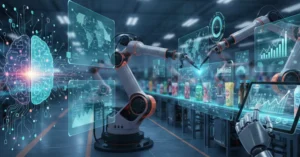
Generative AI tools are redefining how products are designed and optimized.
Use cases include:
-
Automated concept generation
-
Material optimization
-
Design alternatives based on constraints
Meanwhile, machine learning applications analyze vast datasets to improve performance, reliability, and customer experience.
6. Predictive analytics for smarter decisions
Predictive analytics empowers engineering teams to make data-driven decisions throughout the product lifecycle.
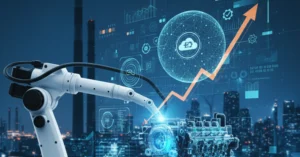
Key benefits:
-
Failure prediction and preventive maintenance
-
Demand forecasting
-
Performance optimization
When integrated into PLM systems, predictive analytics ensures continuous improvement.
👥 Human-centered and collaborative engineering
7. User-centered design and human-computer interaction
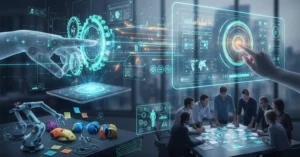
The future of product engineering places people at the center.
User-centered design focuses on:
-
Empathy-driven research
-
Usability testing
-
Accessibility and inclusivity
Coupled with human-computer interaction (HCI) principles, products become intuitive, efficient, and enjoyable to use.
8. Design thinking processes for innovation
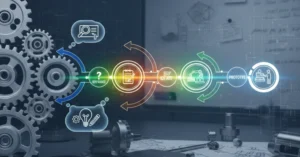
Design thinking processes encourage experimentation, creativity, and rapid iteration.
Core stages include:
-
Empathize
-
Define
-
Ideate
-
Prototype
-
Test
This approach aligns engineering goals with real user needs, reducing market risk.
9. Cross-functional collaboration as a competitive advantage
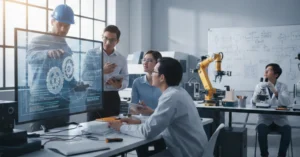
Modern product engineering thrives on cross-functional collaboration between engineering, design, marketing, and manufacturing teams.
Results include:
-
Faster time-to-market
-
Reduced rework and misalignment
-
Better product-market fit
Digital collaboration platforms and shared data ecosystems are critical enablers.
🔄 Product Lifecycle Management in the digital age
10. Smarter Product Lifecycle Management (PLM)
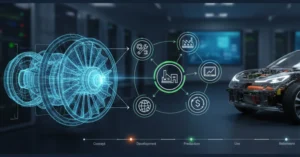
Product lifecycle management systems are evolving to integrate AI, digital twins, and analytics.
Modern PLM supports:
-
End-to-end visibility
-
Compliance and documentation
-
Continuous optimization
PLM acts as the backbone connecting design, manufacturing, and post-launch support.
📌 Best practices for future-ready product engineering
To stay competitive, organizations should:
-
✔ Invest in digital twins technology and AI-driven tools
-
✔ Prioritize design for manufacturability early
-
✔ Embed user-centered design principles
-
✔ Foster cross-functional collaboration
-
✔ Leverage predictive analytics for lifecycle optimization
❓ Unique FAQ: The future of product engineering
Q1. How does edge computing impact product safety?
Edge computing enables real-time safety monitoring, reducing response time during critical events.
Q2. Can generative AI tools replace human engineers?
No. They augment creativity and efficiency but still require human judgment and expertise.
Q3. Is additive manufacturing suitable for mass production?
Yes, especially for customized or complex components where traditional methods fall short.
Q4. How do digital twins support sustainability?
They reduce waste by minimizing physical prototyping and optimizing energy usage.
Conclusion: Engineering the future with intelligence and purpose
The future of product engineering lies at the intersection of technology, creativity, and collaboration. By embracing edge computing, generative AI tools, additive manufacturing, and user-centered design, organizations can build smarter, more resilient products that meet evolving market demands.
🚀 Build the future with NirVipa Technology
At Nirvipa Technology, we specialize in delivering product engineering and innovation that help businesses stay competitive in a rapidly evolving technology landscape. Whether you’re a startup building your first product or an enterprise optimizing complex systems, Nirvipa Technology is your trusted partner for engineering innovation.
👉 Explore our services and discover how we can help you engineer smarter, faster, and more sustainable products.
🔗 Visit: NirVipa Technologies services