

Digital twin technology is transforming modern product engineering by enabling real-time simulation, predictive analysis, and data-driven decision-making across the entire product lifecycle. Unlike traditional engineering tools, digital twins combine physics-based models, live sensor data, and artificial intelligence to mirror real-world systems with unprecedented accuracy.
This article explores what digital twin technology is, how it differs from FEA, its ROI in product development, the role of AI in improving accuracy and analytics, and its advantages and disadvantages—all optimized for search intent and featured-snippet readiness.
What is digital twin technology?
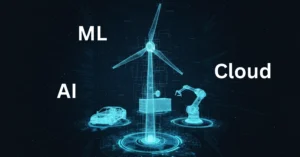
A Digital Twin is a virtual replica of a physical product, system, or process that continuously updates using real-time data from sensors, IoT devices, and operational systems.
Key characteristics of digital twins
-
Real-time data synchronization
-
Continuous lifecycle modeling (design → manufacturing → operation)
-
Predictive and prescriptive analytics
-
Integration with AI, ML, and cloud computing
Unlike static simulations, digital twins evolve alongside the physical asset, making them highly valuable in complex product engineering environments.
Digital twin vs FEA in product engineering
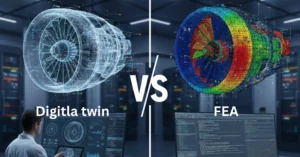
One of the most common questions engineers ask is how Digital Twin Technology differs from Finite Element Analysis (FEA).
Finite Element Analysis (FEA) explained
FEA is a numerical method used to:
- Analyze structural strength
- Simulate thermal and vibration behavior
-
Predict stress, strain, and deformation
FEA is typically used during the design phase and relies on predefined assumptions and boundary conditions.
Key differences: Digital twin vs FEA
| Aspect | Digital twin technology | FEA |
|---|---|---|
| Scope | Full product lifecycle | Design-stage simulation |
| Data Source | Real-time + historical data | Static input data |
| Adaptability | Self-updating models | Fixed scenarios |
| AI Integration | Native & advanced | Limited |
| Predictive Capability | High (failure & performance) | Scenario-based |
| Decision Support | Operational & strategic | Engineering validation |
👉 In simple terms:
FEA is a tool; Digital twin is a system.
Digital twins may include FEA models but extend far beyond them.
ROI analysis of digital twin technology in product development
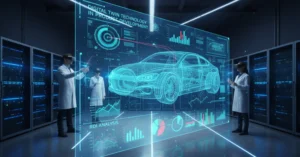
Why companies invest in digital twins
Digital twin implementation directly impacts cost reduction, speed, and quality, making ROI measurable and compelling.
Key ROI drivers
-
Reduced prototyping costs (up to 40%)
-
Shorter development cycles (20–30% faster)
-
Lower failure rates through predictive maintenance
-
Improved product quality and compliance
-
Optimized material usage
Real-world ROI impact
-
Automotive OEMs report 25% reduction in warranty claims
-
Aerospace firms reduce testing costs by millions annually
-
Manufacturing companies achieve 10–15% productivity gains
📊 ROI Formula (Simplified): (Cost Savings + Revenue Gains – Implementation Cost) ÷ Implementation Cost
Digital twins typically show positive ROI within 12–24 months, especially in high-value engineering sectors.
How AI enhances digital twin accuracy & data analysis
Artificial Intelligence (AI) is the backbone of modern digital twin ecosystems.
AI capabilities in digital twin systems
-
Machine learning for pattern recognition
-
Predictive failure analysis
-
Automated model calibration
-
Real-time anomaly detection
-
Scenario optimization
AI + Digital twin = Smarter engineering
AI allows digital twins to:
-
Learn from operational datahttps://nirvipa.com/services
-
Improve accuracy over time
-
Predict unknown failure modes
-
Adapt to changing environments
Types of AI used
-
Machine Learning (ML): Performance prediction
-
Deep Learning: Complex system behavior modeling
-
Natural Language Processing (NLP): Engineering insights & reports
-
Reinforcement Learning: Design optimization
🔍 Result:
AI-driven digital twins reduce human assumptions and significantly enhance data reliability and decision confidence.
Advantages of digital twin technology
Top benefits for Product engineering
-
Higher design accuracy
-
Real-time performance monitoring
-
Predictive maintenance capabilities
-
Reduced physical testing
-
Faster innovation cycles
-
Improved cross-team collaboration
Strategic business advantages
-
Data-driven product strategy
-
Enhanced customer experience
-
Competitive differentiation
-
Sustainability optimization
Digital twins also support regulatory compliance by providing traceable, auditable simulation data.
Disadvantages & challenges of digital twin technology
Key disadvantages
-
High initial implementation cost
-
Complex system integration
-
Data quality dependency
-
Cybersecurity risks
-
Skilled workforce requirement
Technical limitations
-
Inaccurate sensors lead to unreliable twins
-
AI models require continuous training
-
Scalability issues for small organizations
⚠️ Important Note:
Without a clear use case and data strategy, digital twins can become expensive visualization tools instead of value drivers.
Digital twin use cases in product engineering
-
Virtual product validation
-
Structural & thermal optimization
-
Manufacturing process simulation
-
Lifecycle performance prediction
-
Failure root-cause analysis
Industries adopting digital twins fastest:
-
Automotive
-
Aerospace
-
Industrial manufacturing
-
Energy & utilities
-
Medical devices
Future of digital twin technology
The future lies in:
-
AI-first digital twins
-
Autonomous optimization
-
Integration with generative design
-
Real-time supply chain twins
-
Human-machine collaborative engineering
Digital twins will increasingly serve as decision engines, not just simulation tools.
Digital twin conclusion
Digital Twin Technology represents a paradigm shift in product engineering, offering real-time insight, predictive intelligence, and measurable ROI. When combined with AI and advanced analytics, digital twins surpass traditional FEA by enabling continuous optimization across the product lifecycle.
While challenges exist, organizations that adopt digital twins strategically gain faster innovation, reduced costs, and superior product performance – making it one of the most impactful technologies in modern engineering.
Frequently asked questions (FAQ)
Can digital twins replace physical testing entirely?
No. They significantly reduce physical testing but cannot fully replace validation for safety-critical products.
Is digital twin technology suitable for small companies?
Yes, with cloud-based platforms and modular adoption strategies.
Do digital twins require IoT devices?
Not always, but IoT improves real-time accuracy and value.
How secure are digital twin systems?
Security depends on architecture; encryption, access control, and data governance are essential.
Can one product have multiple digital twins?
Yes. Separate twins can exist for design, manufacturing, and operational phases.
🚀 Build the future with NirVipa Technology
At Nirvipa Technology, we specialize in delivering product engineering and innovation that help businesses stay competitive in a rapidly evolving technology landscape. Whether you’re a startup building your first product or an manufacturing (OEM), Nirvipa Technology is your trusted partner for engineering innovation.
👉 Explore our services and discover how we can help you engineer smarter, faster, and more sustainable products.
🔗 Visit: https://www.nirvipa.com